Canada Express Entry 2026 complete guide. Learn eligibility, CRS score, documents, fees, and step by step PR process with official sources.
Table of Contents
Introduction
Canada Express Entry remains the main pathway for skilled workers who want permanent residence in Canada in 2026. This system manages applications for three federal economic immigration programs. The process runs online and uses a points based ranking system. Your profile competes with others in a shared pool. Higher scores receive invitations for permanent residence.
You need a clear plan before entering Express Entry. Small errors reduce scores or delay approval. Many applicants fail due to weak language scores, missing documents, or poor profile timing. This guide explains every stage in detail. You will learn eligibility rules, CRS scoring, documents, fees, timelines, and common mistakes.
The system is managed by the Canadian government through Immigration, Refugees and Citizenship Canada. Selection focuses on age, education, work experience, and language ability. Job offers and provincial nominations raise scores sharply. In 2026, category based draws remain important. Healthcare, STEM, trades, transport, and French language skills receive priority.
This article follows AdSense friendly structure. Content uses verified information from official sources. You should always recheck rules on government websites before action. Immigration policies change often. This guide helps you prepare with clarity and confidence.
What is Canada Express Entry
Canada Express Entry is an online system used to select skilled immigrants for permanent residence in Canada. It started in 2015 and remains active in 2026. The system ranks candidates using the Comprehensive Ranking System.
Key features
- Online profile based selection
- Points based ranking
- Regular invitation rounds
- Faster processing than paper routes
Express Entry does not guarantee permanent residence. It creates a competitive pool. Only top ranked profiles receive an Invitation to Apply. After invitation, you submit a full application with documents.
Express Entry works with federal programs and provincial nominations. Provinces search the pool and invite candidates who match local labor needs. A provincial nomination adds 600 CRS points. This almost assures an invitation.
Express Entry supports economic growth. It targets skilled workers who support labor shortages. The system favors younger applicants with strong English or French skills and Canadian work or study exposure.
Express Entry Programs Explained
Express Entry manages three federal programs.
Federal Skilled Worker Program
This program targets skilled professionals with foreign work experience. You need at least one year of continuous skilled work. Language test results and education assessment are mandatory.
Federal Skilled Trades Program
This program targets skilled trade workers. Examples include electricians, plumbers, welders, and chefs. A job offer or trade certification is required.
Canadian Experience Class
This program targets workers with Canadian work experience. You need one year of skilled work in Canada within the last three years. Education assessment is not mandatory but helps CRS score.
Each program has different eligibility rules. All programs share one Express Entry pool. CRS ranking applies equally.


Eligibility Requirements 2026
Eligibility depends on program choice. General requirements apply to all candidates.
Basic eligibility
• Age above 18
• Valid passport
• Language test results
• Education credential assessment
• Skilled work experience
Language tests accepted
• IELTS General Training
• CELPIP General
• TEF Canada
• TCF Canada
Minimum language scores vary by program. Higher scores raise CRS points sharply.
Education assessment
Foreign education needs assessment from approved agencies. WES remains the most used agency. Assessment proves Canadian equivalency.
Work experience
Work must fall under NOC TEER 0, 1, 2, or 3. Experience must match lead statement and duties.
Proof of funds
Most applicants need settlement funds. Amount depends on family size. Canadian job holders and CEC applicants are exempt.
Admissibility
You must clear medical and police checks. Criminal or medical issues lead to refusal.
CRS Score System Explained
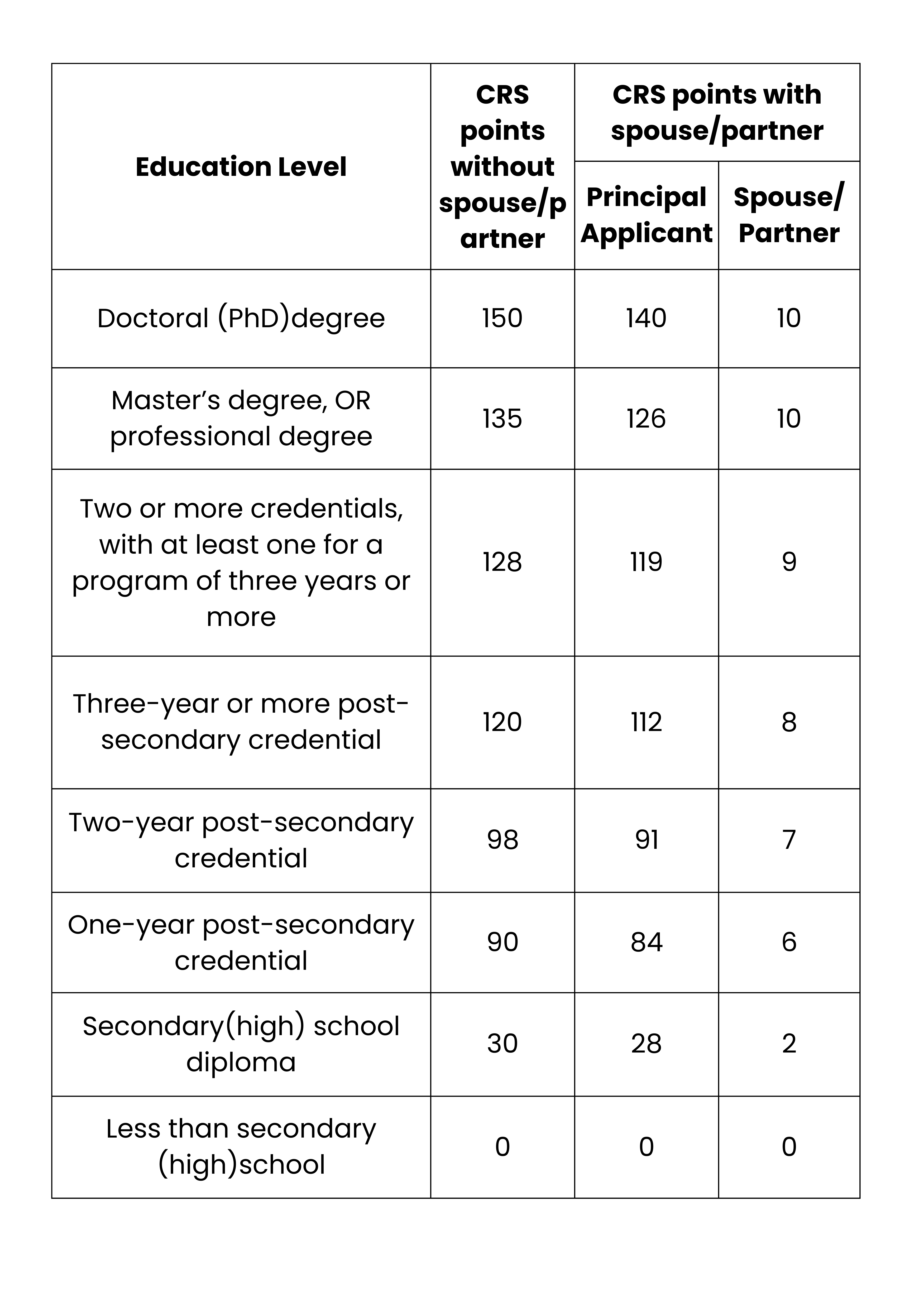
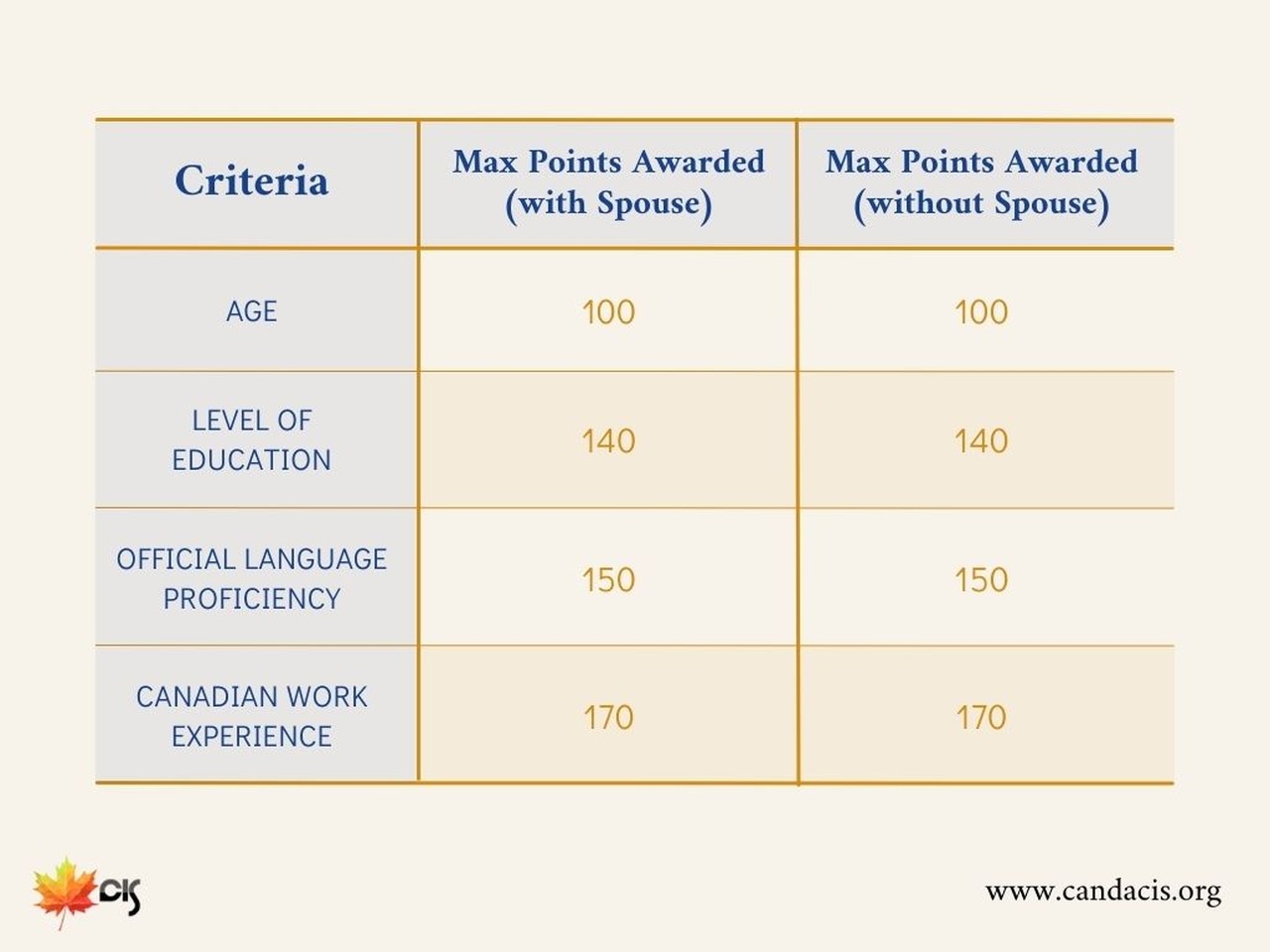
CRS ranks profiles out of 1200 points. Higher scores receive invitations.
CRS components
• Core human capital
• Spouse factors
• Skill transferability
• Additional points
Core factors include age, education, language, and work experience. Age gives maximum points between 20 and 29. Points drop after 30.
Skill transferability rewards combinations. Strong language plus education gives extra points. Foreign work plus language also adds points.
Additional points include
- Provincial nomination 600 points
- Canadian education 15 to 30 points
- Job offer 50 or 200 points
- French language skills 25 to 50 points
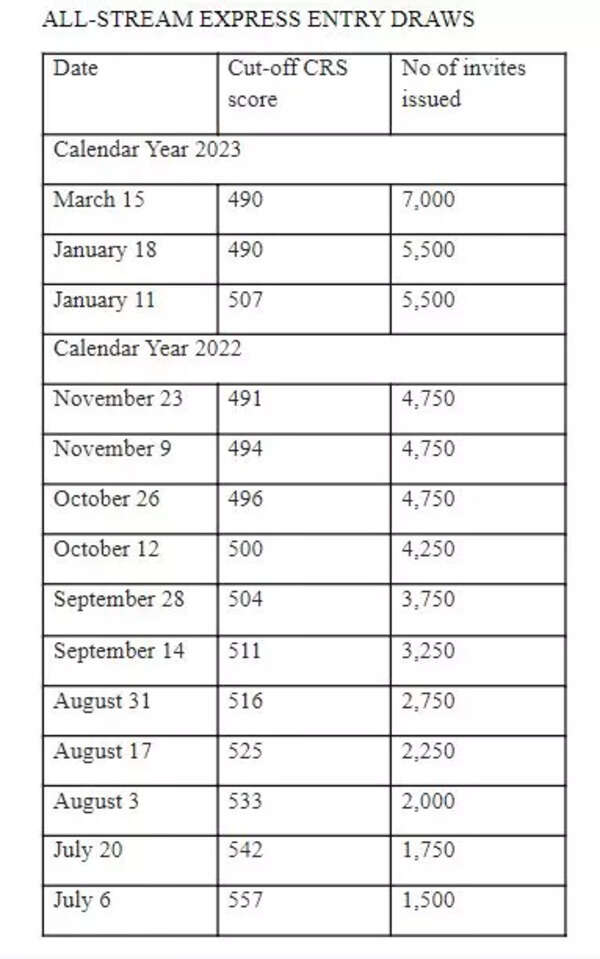
CRS cutoffs change every draw. Category based draws lower cutoffs for priority occupations.
Step by Step Express Entry Process
Step 1 Language test
Book and clear approved language exam. Aim for high CLB levels. Language scores impact CRS heavily.
Step 2 Education assessment
Apply for ECA from approved agency. This process takes several weeks.
Step 3 Create Express Entry profile
Create profile on IRCC portal. Enter personal, education, work, and language details.
Step 4 Enter Express Entry pool
After profile submission, you enter the pool. Profile stays active for one year.
Step 5 Improve CRS score
Retake language test. Add spouse scores. Secure job offer. Seek provincial nomination.
Step 6 Receive Invitation to Apply
Top ranked profiles receive ITA during draws.
Step 7 Submit PR application
Upload documents within 60 days. Pay fees.
Step 8 Biometrics and medical
Complete biometrics and medical exam.
Step 9 Final decision
IRCC reviews application. Approval leads to Confirmation of Permanent Residence.
Documents Checklist
You need clear and accurate documents.
Mandatory documents
- • Passport
- • Language test results
- • ECA report
- • Work reference letters
- • Proof of funds
- • Police clearance certificates
- • Medical exam report
Optional documents
- • Job offer letter
- • Provincial nomination certificate
- • Canadian education proof
Documents must match profile data. Mismatch leads to refusal.
Fees and Processing Time
Express Entry fees in 2026 follow current IRCC structure.
Fee table
Application processing fee per adult CAD 850
Right of permanent residence fee CAD 515
Biometrics fee CAD 85
Processing time averages six months after full application submission. Delays occur due to background checks or document issues.
Common Mistakes to Avoid
- Incorrect NOC code selection
- Inflated work experience claims
- Low language preparation
- Expired documents
- Missing proof of funds
- Ignoring provincial options
Accurate profile data is critical. Any false claim leads to ban.
FAQs
What is the minimum CRS score in 2026
CRS cutoffs vary by draw type. Category draws often stay lower than general draws.Is job offer required for Express Entry
Job offer is optional. Strong language and education scores offset absence.How long does Express Entry take
Average processing stays around six months after ITA.Is proof of funds mandatory
Most applicants need proof of funds except CEC and valid job holders.How many times draws occur
Draws usually occur every two weeks.Does age affect CRS score
Yes. Age points drop after 30.Is French language beneficial
Yes. French skills give extra CRS points.Is provincial nomination important
Provincial nomination adds 600 points and leads to fast invitation.
Conclusion
Canada Express Entry remains a strong immigration pathway in 2026. Success depends on preparation, accuracy, and strategy. Strong language scores, correct NOC selection, and timely document readiness increase approval chances. Category based draws offer new opportunities for targeted occupations. Provincial nominations provide major score boosts. Always rely on official information and verified updates. Express Entry rewards applicants who plan early and act precisely.
Disclaimer
Information provided here is based on official public sources and general experience. Immigration rules change frequently. Always verify details on official government websites before taking action. This content does not provide legal or immigration consultancy services.
Last Updated Date
Last updated on 5 February 2026